

- Jan 14, 2026
- Posted by: Sébastien Bonneau
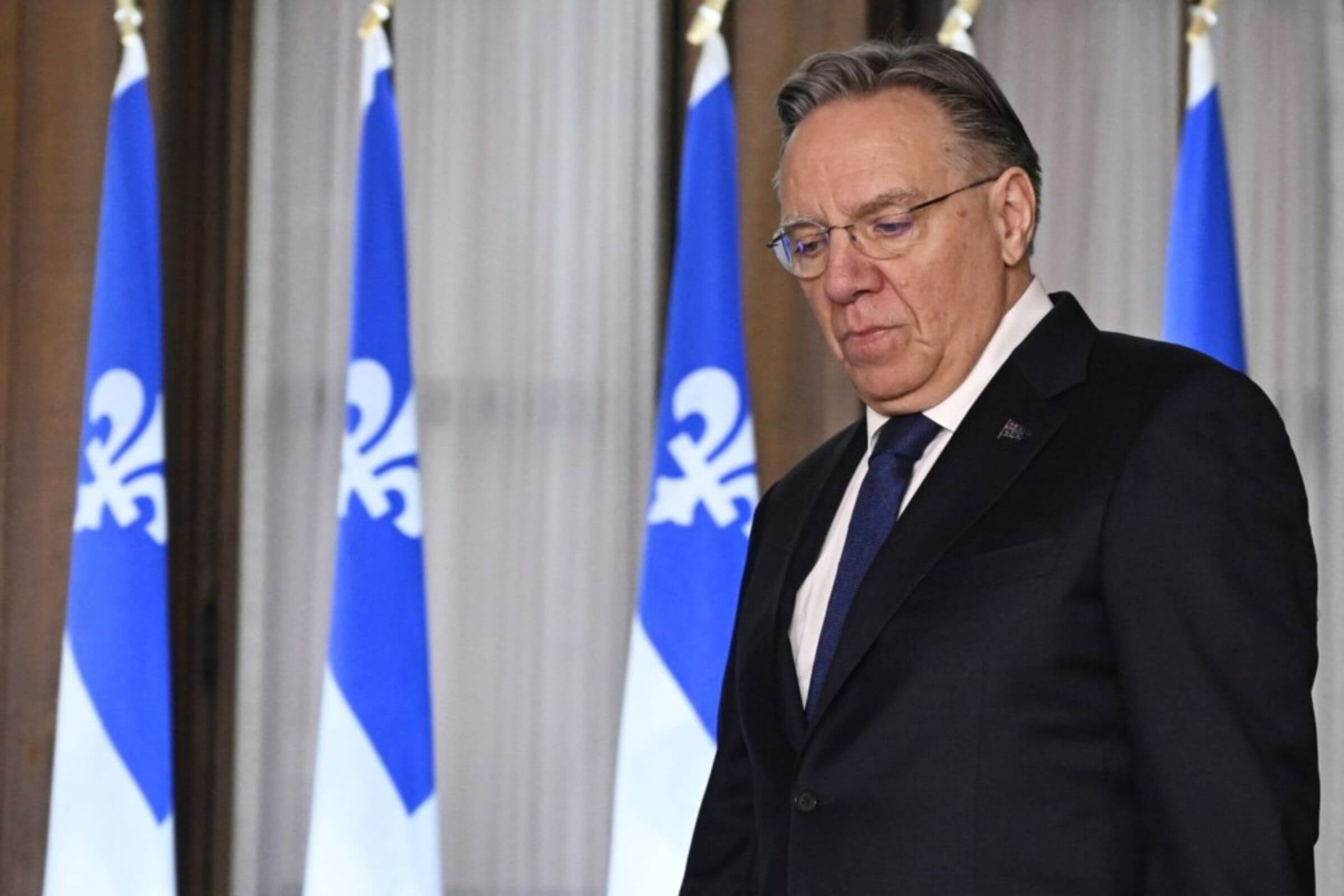
On January 14, 2026, Quebec Premier François Legault announced his resignation as leader of the Coalition Avenir Québec (CAQ) “for the good of the party and especially for the good of Quebec,” along with his intention not to seek re-election in the provincial general election scheduled for October 5, 2026. He will remain in office as Premier until a new CAQ leader is chosen. In his statement, Legault expressed hope that the election will focus on Quebec’s challenges rather than a desire for change.
Despite his earlier commitment to run again, Legault was unable to reset his government following last fall’s cabinet shuffle and opening speech. The resignations of key ministers—Economy Minister Pierre Fitzgibbon in September 2024 and Health Minister Christian Dubé on December 18, 2025—contributed to the pressure, amid persistently low polling. The latest poll (Pallas Data–Qc125–L’actualité) shows the CAQ at 11% support (tied with Québec solidaire), with the Parti Québécois leading at 34%, Quebec Liberals at 24%, and Conservative Party of Quebec at 16%.
This resignation follows Quebec Liberal leader Pablo Rodriguez’s departure on December 17, 2025. Charles Milliard announced his candidacy for the Quebec Liberal leadership. Results are expected on March 14, 2026.
What this means in the short term
- The CAQ government continues to operate under Premier Legault until a successor is selected through an internal party process (likely in the coming weeks or months).
- Day-to-day government operations are not expected to face immediate disruption.
- No by-election has been called; the fixed election date remains October 2026 (unless changed by the incoming leadership).
- The CAQ executive will meet tonight to set the guidelines for a leadership race.
- Among likely or speculated candidates are ministers such as Simon Jolin-Barrette (Justice), Sonia LeBel (Education), Geneviève Guilbault (Municipal Affairs), Christine Fréchette (Economy), and Bernard Drainville (Environment) and MNA François Bonnardel.
- The new leader, once elected by party members, would be sworn in as Premier, even if he is not a member of the National Assembly.
Potential implications
- Policy continuity vs. change — Many of the CAQ’s signature policies (e.g., in economic development, language requirements under Bill 96, secularism under Bill 21, health reforms, or green economy initiatives) may be reassessed or adjusted under new leadership and/or in preparation for the election. This resignation may delay the tabling of Budget 2026-2027 to allow the new leader’s input, though public consultations will continue as normal until mid-February 2026.
- Increased political uncertainty — With the CAQ trailing significantly in recent polls, the leadership race and pre-election period could bring more volatility in decision-making, budget priorities, or negotiations and discussions with stakeholders. Mr. Legault’s resignation may spark speculations about a merger with the Conservative Party of Quebec (at 16%) or renewed speculation on the future of Quebec solidaire (11%).
- Opportunities and risks — Depending on your sector, this transition may open doors for renewed advocacy on key issues as parties and leadership candidates position themselves for the 2026 election.
Next Steps
Perspectives will continue monitoring developments closely, including the CAQ leadership race, any interim cabinet changes, and evolving positions from opposition parties. Please do not hesitate to contact us directly if you have questions about how this might affect your situation or any other provincial matters.