

- Apr 12, 2026
- Posted by: Sébastien Bonneau
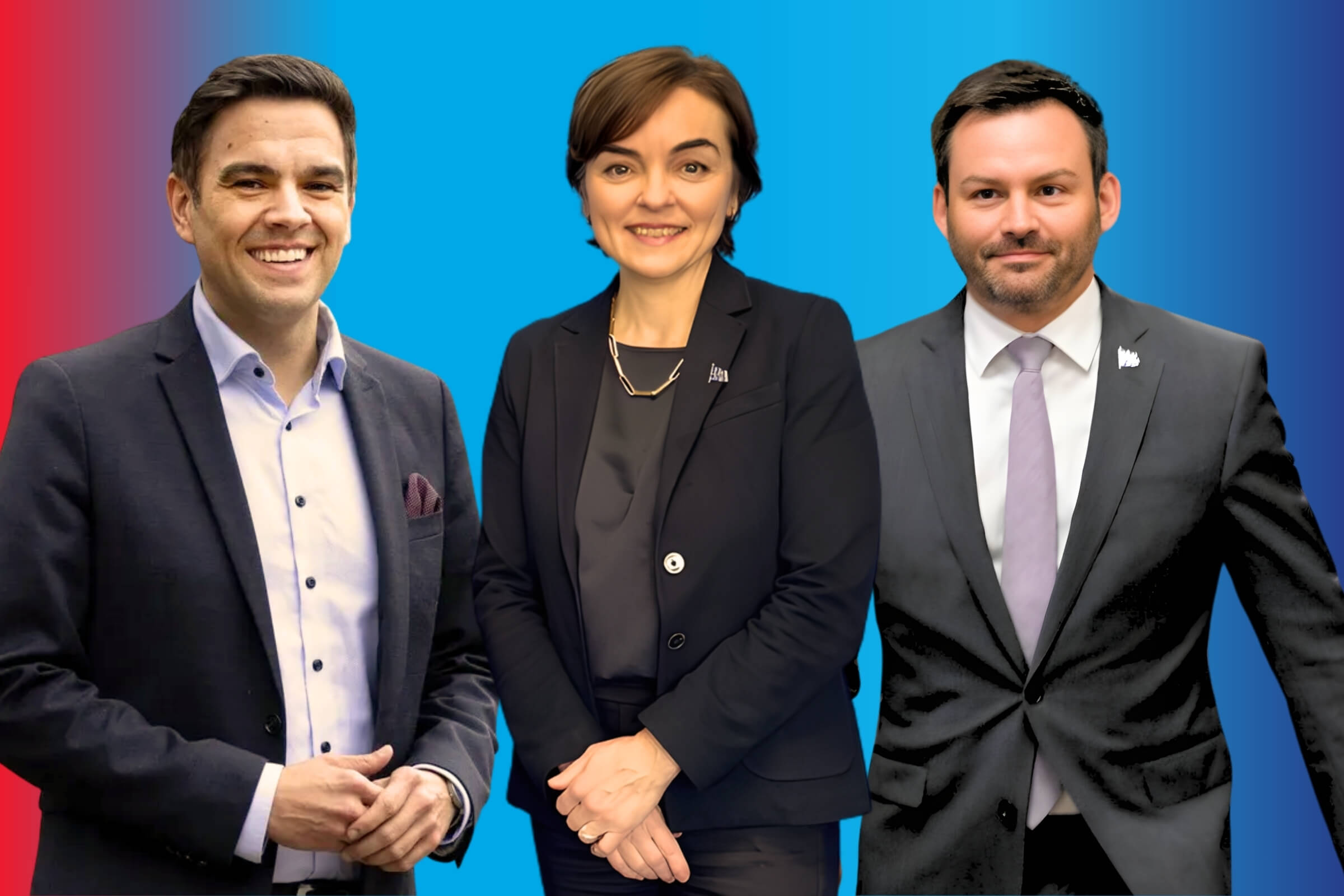
A Wind of Change in a Boiling Political Landscape
On April 12, 2026, Christine Fréchette was elected leader of the Coalition Avenir Québec (CAQ) with 57.9% of the votes, defeating Bernard Drainville. At 56 years old, this native of Trois-Rivières thus becomes the second woman to accede to the position of Premier of Quebec. In her victory speech, she focused on renewal: “a new way of doing things” centred on thoughtful, humane politics, unifying leadership, and action-oriented governance. She extended a hand to her rival and outlined her priorities: reducing pressure on families, propelling the Quebec economy, and restoring confidence in the future.
A Profile With Varied Experience
Holder of a master’s degree in international relations from Université Laval and a bachelor’s degree in administration (economics and international trade) from HEC Montréal, Christine Fréchette has built a solid career in both the private and public sectors. Former CEO of the East Montreal Chamber of Commerce, columnist at Radio-Canada, and public affairs consultant, she was elected as the member for Sanguinet in 2022. She then held key ministerial positions: Immigration, Economy, Innovation, and Energy, as well as responsibilities for the Metropolis and the Montérégie region.
Her background in economics and international relations could prove valuable in a context where Quebec must propel its economy while reducing pressure on families.
A Pre-electoral Context Marked by the Desire for Change
Quebecers have been expressing a strong desire for change for several months. According to the most recent Léger polls, 72% of respondents want a change of government ahead of the next elections, while 74% believe that “things are going badly” in Quebec. After more than seven years in power, the Legault government is showing clear signs of wear. Christine Fréchette will attempt to slow this trend and, if possible, reverse it by infusing a wind of renewal within the CAQ while avoiding bringing the debate back to old divisions.
The most recent Léger poll places the CAQ at only 13% of voting intentions, far behind the Quebec Liberal Party (33%) and the Parti Québécois (32%). This tight race between the PLQ and the PQ significantly weakens the new CAQ government just months before the general election on October 5, 2026.
In this climate, Mrs. Fréchette’s arrival represents both an opportunity and a risky bet. She embodies a certain internal renewal, but she inherits a party in difficulty. Her victory gives her legitimacy, but she will have to convince an electorate that seems ready to definitively turn the page on the Legault era. It remains to be seen whether the new leader will be able to channel this deep desire for change or whether it will continue to benefit the opposition.
Transition Period and Tight Schedule
The transition period is intensive. As of her official swearing-in on April 15, the new leader will quickly take control with the formation of the Council of Ministers (probably around April 20). The return of the National Assembly is scheduled for May 5, with an opening speech that will set out her orientations. The National Assembly will then sit until June 12, before an electoral campaign that could intensify as early as the end of August.
Analysis: A Strategic Window for All Stakeholders
In a Quebec where a large majority aspires to change, Christine Fréchette’s arrival could be perceived as an attempt to modernize the CAQ. Her more “technocratic” and unifying profile contrasts with the sometimes more divisive style of certain competitors. However, the polls indicate that the party remains far from the two main rivals. The real test will be her ability to propose concrete measures that address Quebecers’ daily concerns: health, cost of living and purchasing power, education and affordable housing.
For organizations that have issues with the government, this pre-electoral window offers an opportunity to influence decisions ahead of the elections and to position themselves with the various parties and leaders who aspire to govern Quebec in October 2026.
Perspectives Government Strategies Inc. recommends that you quickly engage in dialogue with the new premier, her ministerial team, and the political staff. The objective: to insert your requests into the opening speech on May 5, a possible economic statement, or into the electoral platforms. Letters, briefs or meetings, it will be essential to demonstrate that your requests are politically winning, easy to implement, and that they will contribute to propelling the Quebec economy, creating quality jobs in the regions, and easing pressures on families. In this fragile pre-electoral context, the guiding principle should be to advance constructive proposals that can help make political gains and resolve emerging issues before the campaign starts.
Although priorities may vary, depending on the party that forms the next government, Mrs. Fréchette can put her own signature to obtain rapid gains in the coming months. No one can predict with certainty the outcome of the October election, but one thing is clear: action right now offers opportunities to organizations and could be decisive.
Quebec is entering an intense political phase. Christine Fréchette may redefine the CAQ project to respond to the desire for change. For economic stakeholders, this is the time to be visible, constructive, and future-oriented while not neglecting the influence of opposition parties. The coming months will determine whether this “new wind” will blow in favour of a more prosperous and confident Quebec, whether dark blue (PQ), bright red (PLQ), or light blue (CAQ).
Links: